







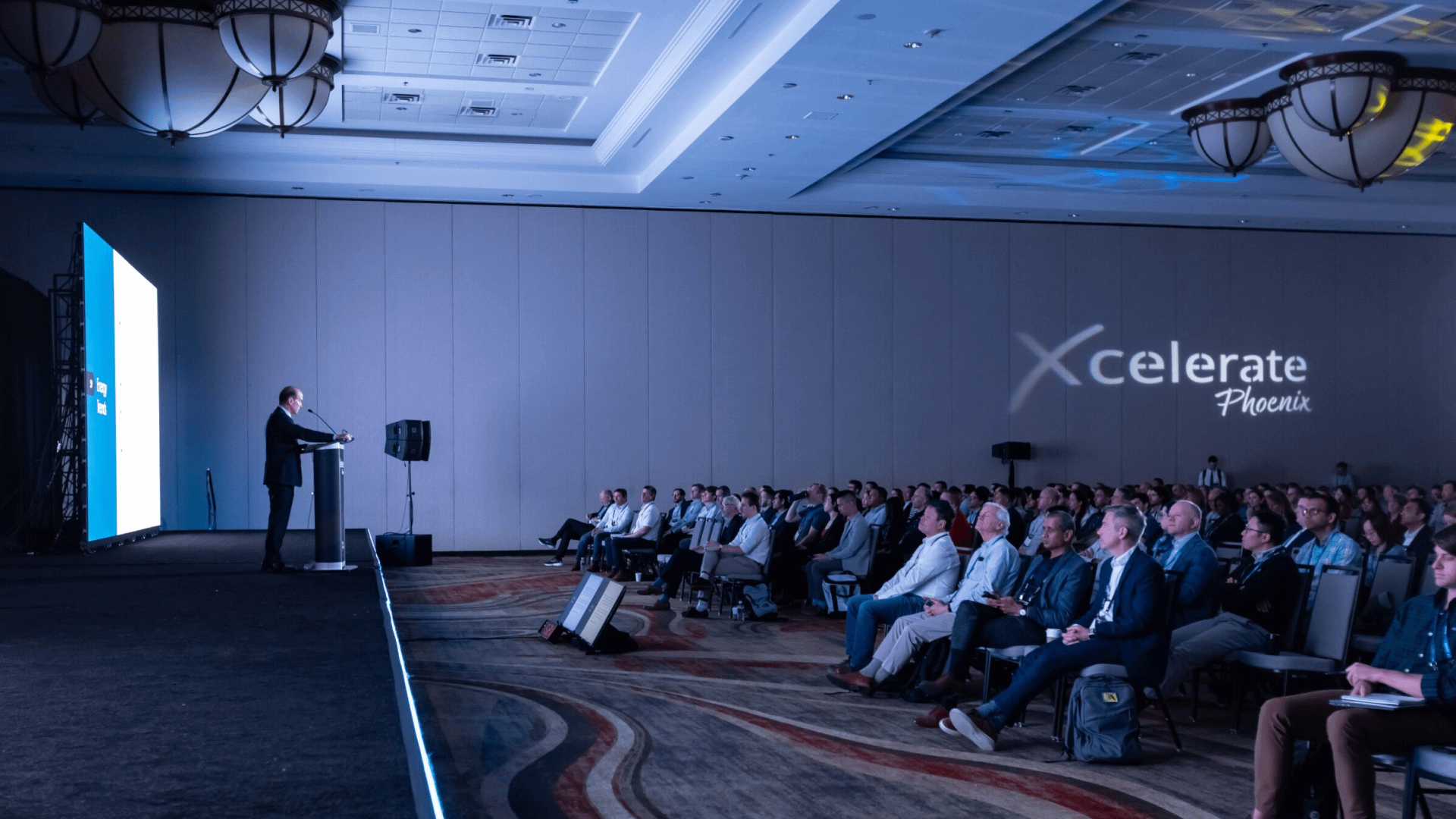

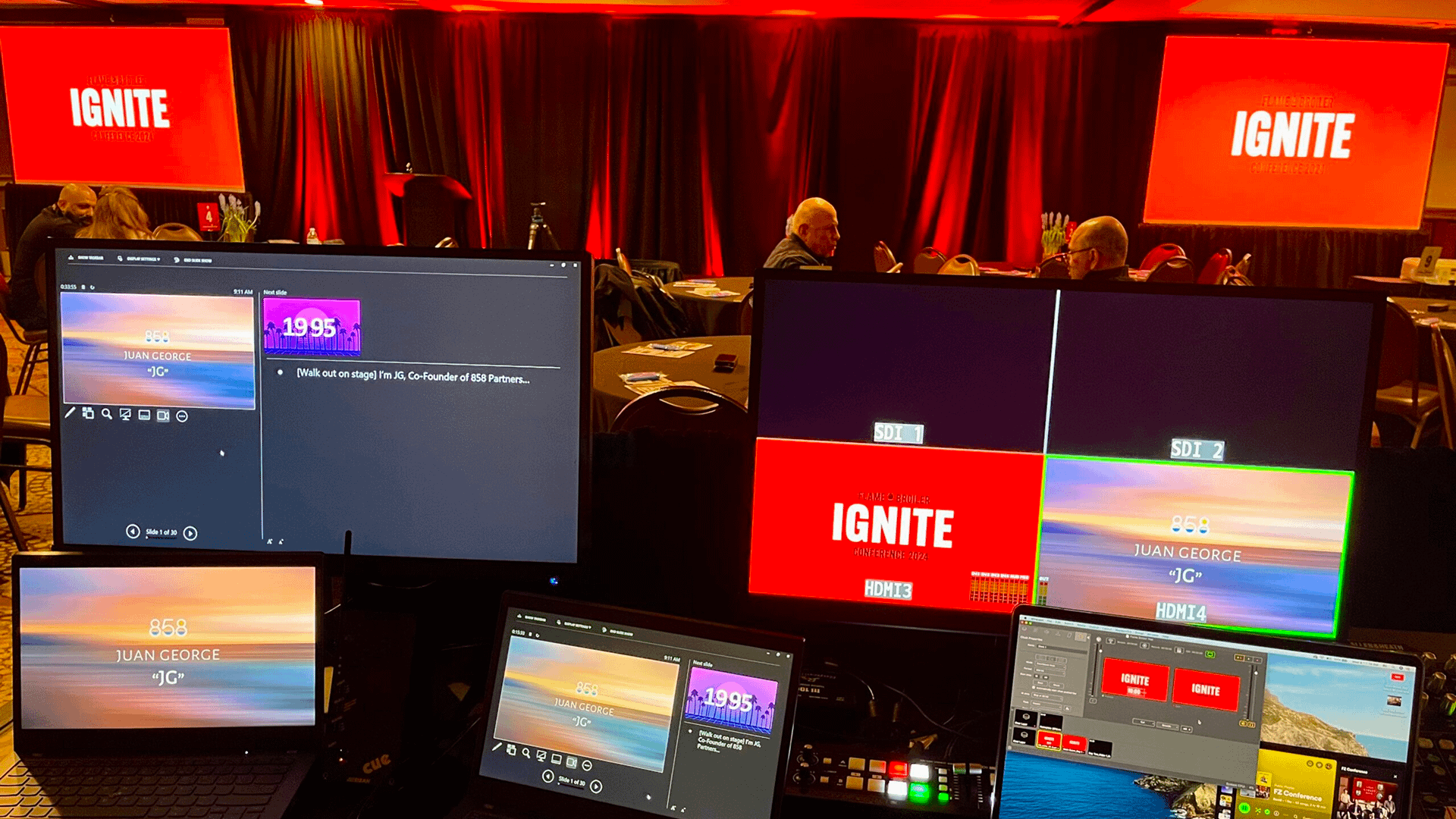
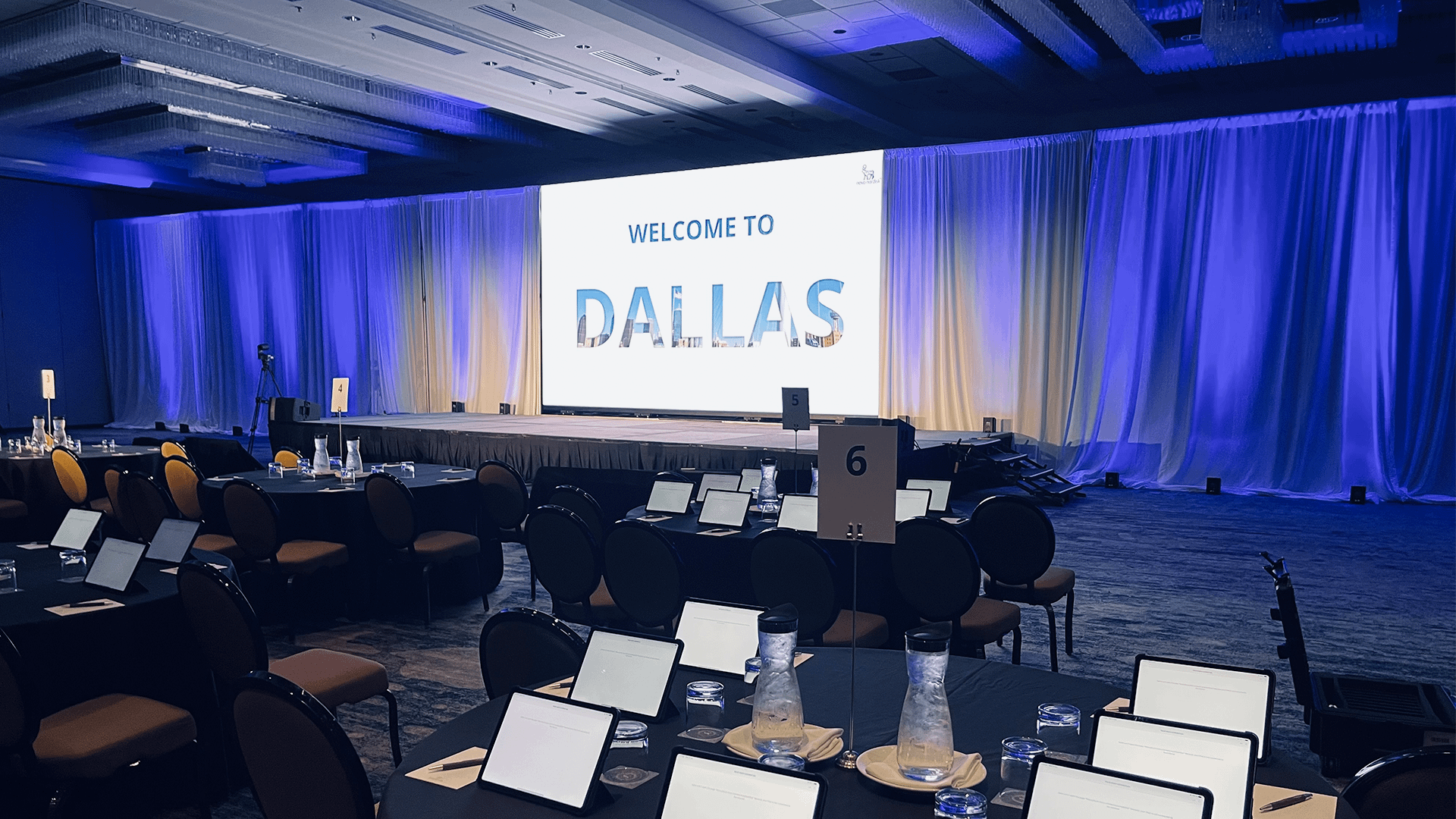
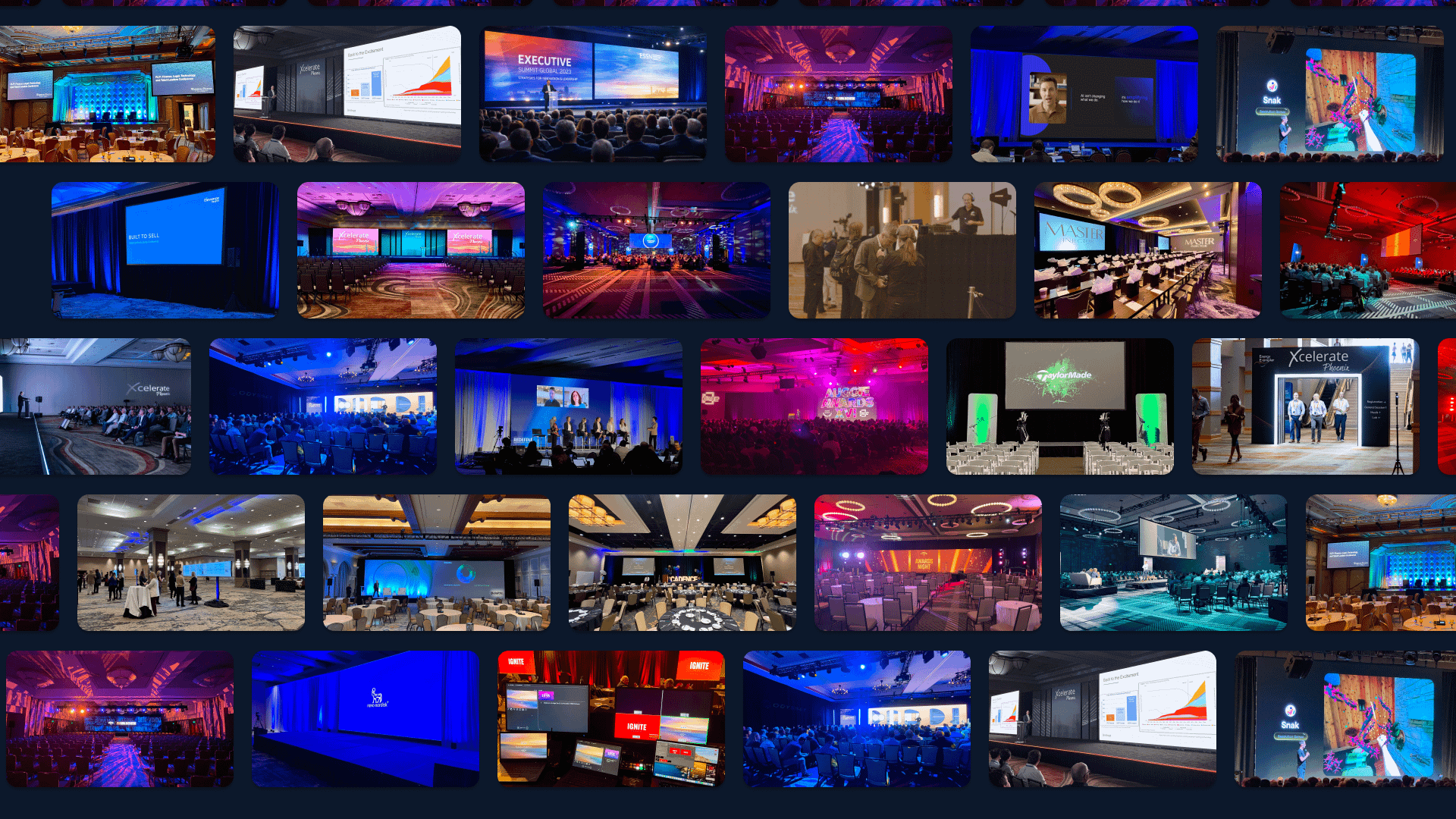

AV production is the technical planning and execution of audio, video, lighting, and streaming systems for live events. It covers microphone setup, LED wall installation, multi-camera live streaming, session recording, and managing the run of show. For corporate events with 50 or more attendees, executive presenters, or remote participants, professional AV production is what separates a polished, high-impact experience from a forgettable one.
Corporate AV Production Essentials
- Definition: Professional AV production is the technical management of audio, video, lighting, and streaming. Unlike simple equipment rental, it includes system design, crew management, and real-time troubleshooting.
- When to Hire: Professional AV is essential for events with 50+ attendees, executive speakers, or hybrid/recording requirements.
- In-House vs. Third-Party: Third-party providers typically offer 30–50% more value than in-house venue services because they do not pay the high commissions required by hotel contracts.
- Budget Benchmarks: Costs range from $10,000 for basic 100-person meetings to $150,000+ for complex, multi-day conferences.
- Lead Time: Book 4–6 months in advance for major conferences and 4–8 weeks for single-day events.
What AV Production Includes
The core components are:
- Audio: Microphones, speaker systems, and mixing consoles for clear, balanced sound in every seat
- Video: LED walls, projection, confidence monitors, and IMAG for large rooms
- Lighting: Stage lighting, key lights, and color washes that support your brand
- Streaming and recording: Live broadcast via Zoom, Teams, or custom portals; session recording for on-demand access or compliance
- Technical direction: A TD manages crew, coordinates signal flow, calls camera switches, and troubleshoots in real time
AV production is not equipment rental. Renting a projector and a microphone is a transaction. AV production is a service that includes system design, crew management, on-site execution, and real-time problem solving.

Who Needs Professional AV Production
Any event where technical failure would damage your brand or undermine your message needs a dedicated production partner. That includes:
Corporate town halls and all-hands meetings Multi-day conferences (internal or client-facing) Hybrid events with in-person and remote attendees Medical and CME conferences with recording requirements Product launches, board meetings, and awards ceremonies
The threshold is simple: if your event has 50+ attendees, executive speakers, hybrid components, recording requirements, or high production value expectations, professional AV is not optional.

Event Production vs. AV Production
These terms get used interchangeably, but they describe different jobs.
Event production manages the overall experience: venue selection, vendor coordination, registration, logistics, and budget. The event producer is the quarterback.
AV production handles technical execution within the event: audio, video, lighting, streaming, and crew management. The AV team ensures every attendee can hear, see, and engage with what’s being presented.
Below is a breakdown:
AV Production Manages:
- Audio, video, lighting, streaming
- Operates technical equipment and systems
- Handles the “how it reaches the audience”
Event Production Manages:
- Overall experience and logistics
- Coordinates all vendors and timelines
- Handles the “what and when”
Third-Party AV vs. In-House Venue Services
Most hotels and convention centers have an in-house AV provider (Encore is the largest). Whether to use them or bring in an independent company is one of the most important decisions an event planner makes.
How in-house AV works:
In-house providers pay the hotel 30% to 50% of total AV revenue as a commission, sometimes higher. That math directly affects what you get. If you spend $50,000 through the venue’s provider, as much as $25,000 goes back to the hotel before a cable is plugged in.
Why third-party companies deliver more value:
100% of your budget goes toward your event, not venue commissions Independent providers invest in current-generation equipment because their reputation depends on it Dedicated crews learn your brand, your executives, and your show flow across multiple events Venue-agnostic expertise means consistent production quality whether your event is in Phoenix, Orange County, or Massachusetts
You have the right to bring your own AV. Most planners don’t realize this. Negotiate AV flexibility before signing the venue contract. Hotels value room blocks and food-and-beverage revenue far more than AV commissions. Most will accommodate outside vendors.
In-house AV is appropriate for simple meetings under $5,000 with basic audio and screen.
What to Look For in an AV Production Company
Relevant experience: Ask for examples of events like yours. If you’re planning a medical conference, you want a partner who understands CME recording requirements, not a company whose portfolio is primarily weddings.
A partnership mindset: The best AV companies ask about your event goals, not just your equipment list. They flag potential problems before they happen and explain technical concepts in plain language.
Transparent pricing: A trustworthy partner provides line-item proposals with individual costs for equipment, labor, and travel. Bundled packages with vague descriptions are a red flag. So is a quote 40% cheaper than everyone else with no explanation.
Red Flags to Watch For
Takes 3+ days to respond to emails or calls Refuses to provide a line-item breakdown Can’t provide references from events similar to yours No backup plans for equipment failure Resistant to site surveys or rehearsals “We can do anything” with no specifics on how
Communication problems during the planning process are the strongest predictor of problems during your event.
FAQ
How much does AV production cost for corporate events?
Corporate event AV production typically ranges from $10,000 for a basic 100-person meeting to $150,000+ for multi-day conferences with hybrid streaming and complex technical requirements. Costs depend on event size, duration, technical complexity, and production elements like LED walls or multi-camera setups.
Should I use the venue's in-house AV or hire a third-party company?
For events with AV budgets over $25,000, third-party production typically delivers better value. Independent providers don’t pay venue commissions (30% to 50% of total billing), which means more budget goes toward your actual event. Venue AV works for simple meetings with basic needs.
Can I bring my own AV company to a hotel?
Most venues allow outside AV companies. Review your venue contract for exclusivity clauses before signing, and negotiate AV flexibility upfront. Hotels prioritize room blocks and food-and-beverage revenue over AV commissions, so this conversation is usually successful.
How far in advance should I book an AV production company?
4 to 6 months for major conferences with 300+ attendees or complex hybrid components. Single-day corporate events need 4 to 8 weeks minimum. Last-minute bookings under two weeks limit equipment availability, reduce crew options, and increase costs.
The right AV partner becomes an extension of your team. They learn your brand, anticipate your needs, and deliver consistent execution across every event and every venue. That reliability is what turns a room with a stage into an experience people remember

